Are you planning to install a solar panel at your home or business? It is a good idea to switch to a solar power system. It is the smartest decision for lowering electricity bills and reducing your carbon footprint.
But before you switch to solar, it is important to understand the difference between on-grid vs off-grid solar systems and the role of grid-tied solar systems.
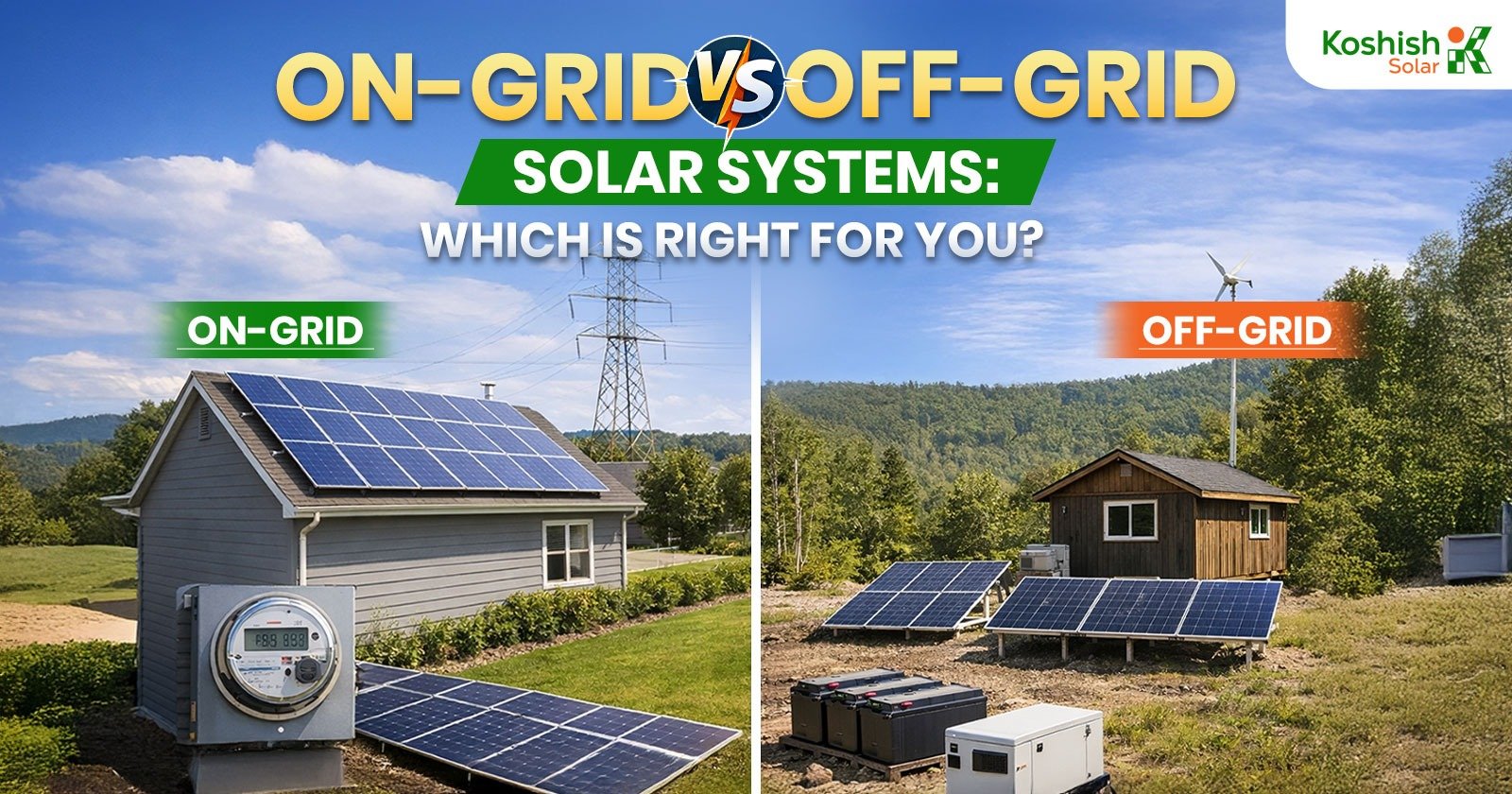
Both systems produce clean & green energy, but they work in very different ways. An on-grid solar system is connected to the main electricity grid.
You can use grid power when your solar system does not produce energy, and you can sell extra power by sending it back to the grid.
An off-grid solar system is not connected to the grid. It stores excess energy in batteries that provide reliable energy during power outages.
In this blog, we’ll explain the important differences between on-grid vs off-grid solar, including their cost, benefits, and subsidy process, and help you choose the best solar power options according to your energy needs.
What Is an Off-Grid Solar System?
An off-grid system is an independent system that runs without dependence on the electricity grid. It generates power by using solar panels and stores the extra energy in batteries for later use, such as at night or during cloudy days.
Off-grid solar systems are a good option for remote areas or where there is no electricity grid. This system uses inverters and charge controllers to supply stable electricity while reducing reliance on diesel generators.
What Is Meant by an On-Grid Solar System?
An on-grid solar system, also known as a grid-tied solar system. It connects your solar panel system to the main electricity grid. Grid-tied solar system automatically switches to grid power during electricity outages or at night.
This system sends back extra generated energy to the grid, and you may receive credits; it is called the Net Metering system.
How Does the Off-Grid Solar System Work?
An off-grid solar system is designed to work completely independently. It works in different ways. Let’s understand how an off-grid solar system works.
- Off-grid solar systems capture sunlight and convert it into DC (direct current) electricity.
- A charge controller manages the flow of electricity to prevent overcharging and protect the battery’s system.
- It stores extra energy produced in batteries, so you can use electricity at night or during electricity outages.
- The inverter converts DC electricity into AC that can easily run your home appliances.
This combination of solar panels, batteries, charge controllers, and inverters makes this system independent, which provides continuous energy.
How Does the On-Grid Solar System Work?
An on-grid solar system is directly connected to the local electricity grid, and it is a perfect option for homes and businesses. Here’s how it works:
- Photovoltaic (PV) panels capture sunlight and generate direct current electricity. These panels are installed on rooftops or in open areas where they get maximum sunlight.
- The generated electricity from the solar panels is sent to an inverter, which converts DC power into AC.
- The converted AC power is sent to the building’s main electrical panel, supplying power to every connected device and appliance in the building.
Advantages of Choosing a Solar Panel System
There are more benefits of choosing a solar panel system, such as lowering electricity costs, providing continuous energy, and protecting the environment.
- Clean & Green Energy : Solar panel systems generate clean and green energy. It produces electricity without emitting carbon emissions.
- Reduce Dependency on Fossil Fuels : By providing continuous energy, a solar power system reduces your dependency on fossil fuels. It generates energy independently through the sun’s rays.
- Less maintenance : Solar power systems require very low maintenance. You only need to clean the panels twice a year. It will be good for you if you connect with solar experts for maintenance. After the initial cost, it will provide you with long-term benefits.
- Reduce Electricity Cost : It helps to reduce your electricity cost by providing reliable energy. It generates electricity from the sun, which provides independent energy.
What Is a Hybrid Solar System?
A hybrid solar system combines the features of both on-grid and off-grid systems. Solar panels absorb sunlight, the hybrid inverter converts it into usable electricity, and stores extra energy produced in batteries for later use.
Hybrid solar systems are the best solar power options for reducing electricity bills without any power outages. This is the best system for anyone who is looking to focus on choosing the right solar system for long-term reliability.
Wrapping Up
When comparing on-grid vs off-grid solar systems, it depends on several factors, such as your location, budget, and energy needs. If you live in a city and have a stable power supply, so, grid-tied solar system with net metering is the option for you.
For remote areas, an off-grid solar system is a good option because it stores energy in batteries.
If you are looking for the best solar system that provides continuous energy and reduces your power bills up to 90%, choose a hybrid solar system. This system contains both features of on-grid and off-grid solar systems.