
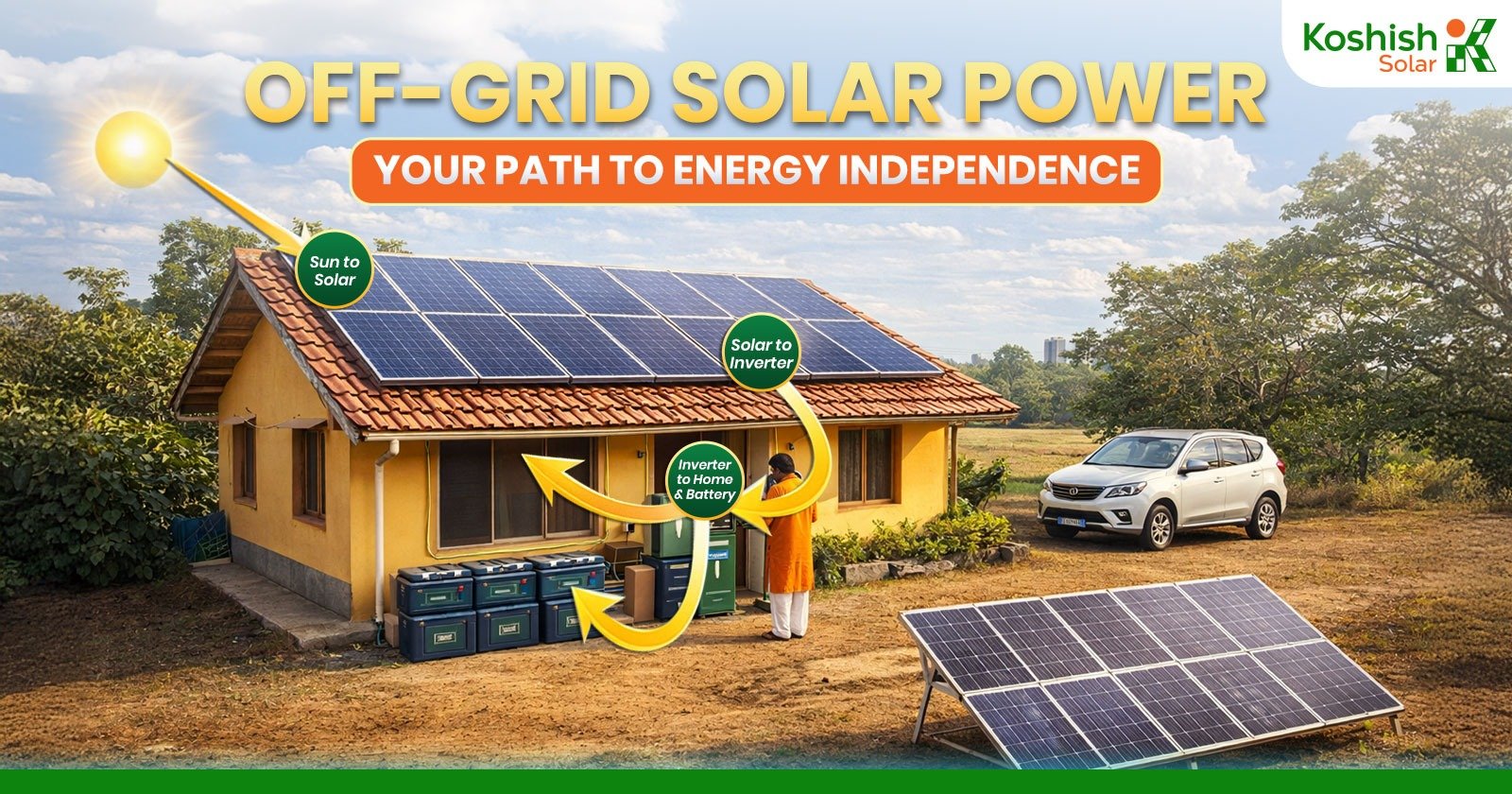
Off-grid solar power, also known as a standalone solar system. It provides a reliable and independent energy solution by producing electricity from sunlight and storing it in batteries for later use. These systems are perfect for locations where no grid access or power cut daily 12-15 hours.
It also reduces your dependency on the utility grid. The system combines solar panels, batteries, inverters, and charge controllers to supply clean and carbon-free energy. In this guide, we will explain about a standalone solar system, off-grid solar power system benefits, cost, and maintenance tips.
What Is an off-Grid Solar Power System?
An off-grid solar system works without depending on the utility grid. It generates electricity through solar panels and stores excess energy in a battery for later use.
The off-grid solar power system is perfect for remote locations or places with frequent power cuts. Off-grid solar power systems use inverters and charge controllers to supply reliable power while reducing dependence on fossil fuels. They are a perfect option for homes off-grid living, cutting down on dependence on regular electricity.
How Does an Off-Grid Solar System Work?
Let’s know how an off-grid solar system works.
- Rooftop solar panels use sunlight and generate DC electricity.
- The charge controller manages power flow to protect the battery.
- Off-grid system stores extra generated energy in a battery for later use.
- The inverter system converts DC electricity into AC.
- A backup generator provides power during outages or at night.
Why Choose Off-Grid Solar Power System?
If you face 12-15 hours daily electricity outages or live in remote locations, off-grid solar system will be the perfect option for you. There are many reasons for switching an off-grid solar power system
- Off-grid solar system is perfect for villages, farms, or remote locations.
- Offer independent energy.
- Produce 100% carbon-free electricity.
- It can be easily installed.
- Rural solar solutions help improve living standards by providing reliable power for homes, schools, and farms.
- It helps to reduce up to 90% electricity bills.
- Perfect for households and villages seeking off-grid living, offering self-sufficient and eco-friendly energy solutions.
- It also reduces dependency on fossil fuels.
Components of an Off-Grid Solar System
An off-grid solar power system for households includes solar panels, batteries, an inverter, and a charge controller.
Solar Panels: Solar panels are a major part of any solar system. They absorb sunlight and convert it into electricity. You can install solar panels in two ways such as ground-mounted or roof-mounted.
Ground-mounted systems are a good option for large properties, while roof-mounted systems are good for homes and buildings where limited space. The solar system size depends on your rooftop space, sunlight availability, and energy needs.
Charge Controller: The charge controller is an important part of any solar system. It manages electricity flow from the solar panels to the batteries, preventing overcharging and extending battery life while keeping the system safe.
Batteries: Solar battery storage systems are an major part of off-grid solar power systems. They save extra power in battery and supply it during outages or when sunlight is not available.
The size and type of battery you need depend on your daily energy use. Before purchasing the battery, keep in mind some factors such as cost, maintenance, and your power requirements.
Inverter: The inverter changes the DC electricity stored in batteries into AC power, so it can be safely used for home appliances.
Tips for Off-Grid Solar Panel System Maintenance
Here are some tips that will help you to maintain your off-grid solar power panel system.
- You should schedule regular maintenance for your solar panels.
- Check panels visually for cracks, scratches, or other damage.
- Turn off the solar system before system maintenance.
- Follow the manufacturer’s instructions provided in the guidebook.
- Track your solar panel output and check if it drops suddenly.
Wrapping Up
Off-grid solar power systems provide a reliable, independent, and renewable energy solution. This system is perfect for remote areas.
By combining solar panels, batteries, inverters, and charge controllers, off grid solar power systems offer clean electricity while reducing dependence on the utility grid and fossil fuels.
With proper system selection, installation, and regular maintenance, off-grid solar power system is perfect for homes, farms, and rural communities to lower electricity costs and contribute to a greener, more sustainable future.