
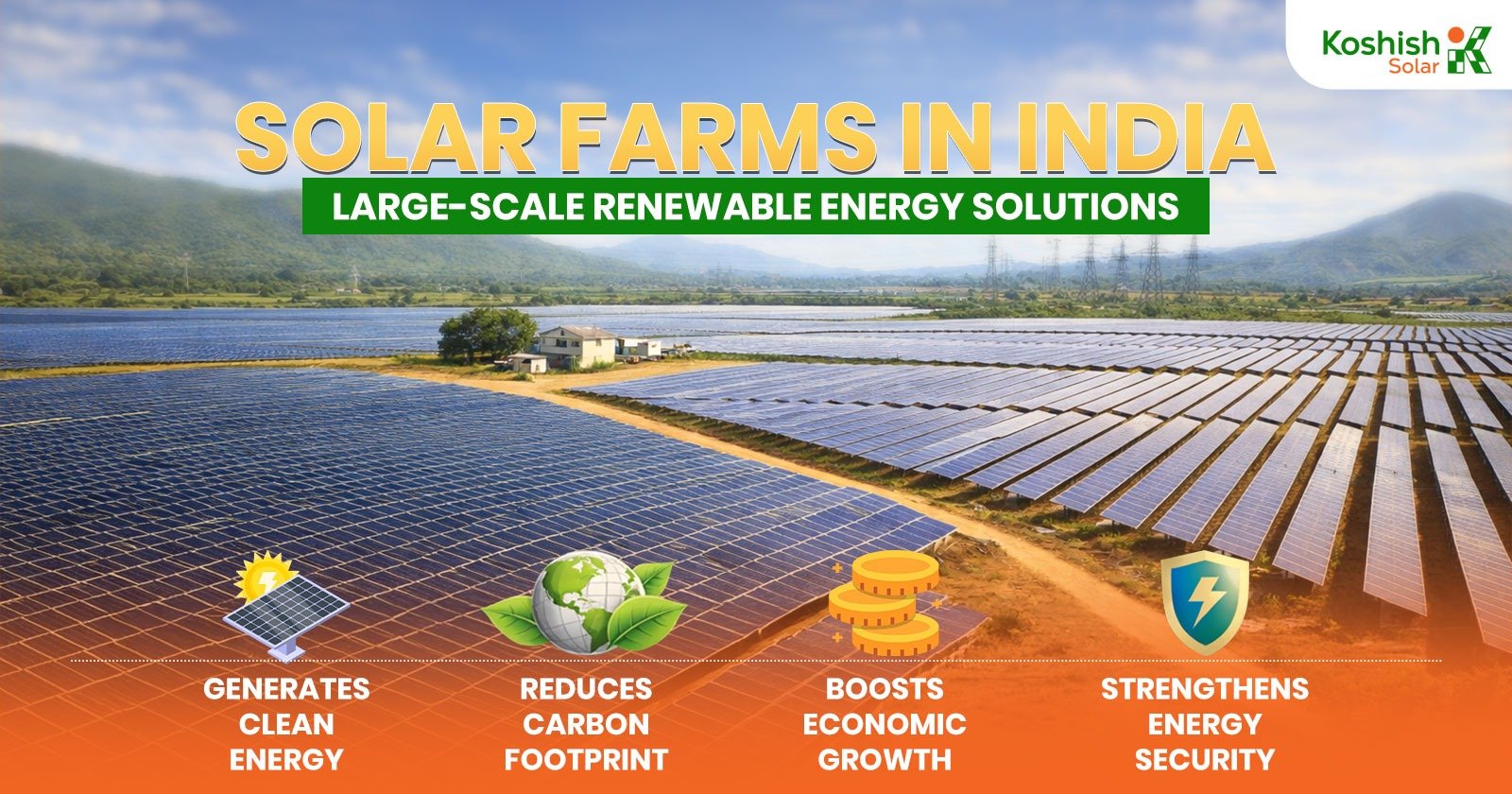
India is witnessing a major transformation in its energy landscape, and solar farms in India are at the center of this change. As the country pushes towards clean energy targets, large solar installations are helping reduce dependence on fossil fuels while supporting economic growth. From the deserts of Rajasthan to the coastal regions of Andhra Pradesh, solar farms in India are emerging as the backbone of the nation’s renewable future.
This blog explores the concept, types, benefits, and challenges of solar farms in India, highlighting their role in utility-scale power generation and sustainable development.
Understanding Solar Farms
Solar farms are large land-based installations where thousands of solar panels are deployed to generate electricity at scale. Unlike rooftop systems, solar farms in India feed power directly into the grid, supplying electricity to cities, industries, and infrastructure.
Most of these installations fall under utility-scale solar projects, typically exceeding 5 MW capacity. These projects are developed by private players, public sector units, or through public-private partnerships. Over the last decade, solar farms in India have expanded rapidly due to falling panel costs, supportive policies, and rising demand for clean energy.
With strong renewable energy investments, India has positioned itself as one of the world’s largest solar markets.
Types of Solar Farms
- Utility-Scale Solar Projects: Utility-scale solar projects are designed to generate power for bulk consumption. These projects are often developed on hundreds or thousands of acres and connected directly to state or national grids. Most large-scale solar plants in India fall into this category, supplying electricity to DISCOMs and industrial consumers.
- Solar Parks: Solar parks are integrated zones created for solar park development, where the government provides land, transmission infrastructure, and regulatory approvals. These parks reduce project risk and attract strong renewable energy investments. Famous examples include the Bhadla Solar Park and the Pavagada Solar Park, both key milestones in India’s solar farm development.
- Captive and Open-Access Solar Farms: These solar farms supply power directly to industries or commercial users through open-access mechanisms. Such large-scale solar plants help corporations meet sustainability goals while reducing energy costs.
- Government Solar Projects: Many government solar projects are implemented by SECI, NTPC, and state nodal agencies. These projects play a vital role in expanding solar farms in India, especially in underserved regions.
Benefits for the Nation and Economy of Solar Farms in India
The ESG compliance benefits for solar farms in India are as follows:
- Energy Security: By expanding solar farms in India, the country reduces dependence on imported coal and oil. Utility-scale solar projects provide stable, long-term power at predictable costs.
- Economic Growth and Jobs: Large-scale solar plants generate employment during construction, operations, and maintenance. Additionally, solar park development stimulates local economies through infrastructure growth and ancillary services.
- Boost to Renewable Energy Investments: India has attracted billions in renewable energy investments, both domestic and foreign. The scale and reliability of solar farms in India make them attractive assets for long-term investors.
- Environmental Benefits: Replacing fossil fuel power with solar farms in India significantly reduces carbon emissions, air pollution, and water consumption. Many government solar projects align with India’s Net Zero commitments.
- Affordable Power: Over time, utility-scale solar projects have reduced electricity costs, making solar one of the cheapest power sources in India.
Challenges and Opportunities in Solar Farms in India
Challenges
Land Acquisition: Large land requirements can delay the construction of large-scale solar plants, especially in densely populated areas.
Grid Integration: Managing variability and ensuring grid stability remain challenges for utility-scale solar projects.
Financing Risks: Despite rising renewable energy investments, delays in DISCOM payments can affect project viability.
Policy Consistency: Changing regulations can slow down solar park development and investor confidence.
Opportunities
Hybrid Projects: Combining solar with storage or wind enhances the efficiency of solar farms in India.
Advanced Technology: Innovations such as bifacial modules and trackers are improving output from large-scale solar plants.
Rural Development: Government solar projects are creating infrastructure and employment in remote regions.
Export Potential: India’s success in solar farms in India positions it as a global leader in clean energy deployment.
Wrapping Up
Solar farms in India are more than just power plants; they are catalysts for economic growth, energy independence, and climate resilience. With expanding utility-scale solar projects, strong renewable energy investments, and structured solar park development, India is building a robust foundation for its clean energy future. While challenges exist, the opportunities far outweigh them, making solar farms in India a cornerstone of sustainable development.