
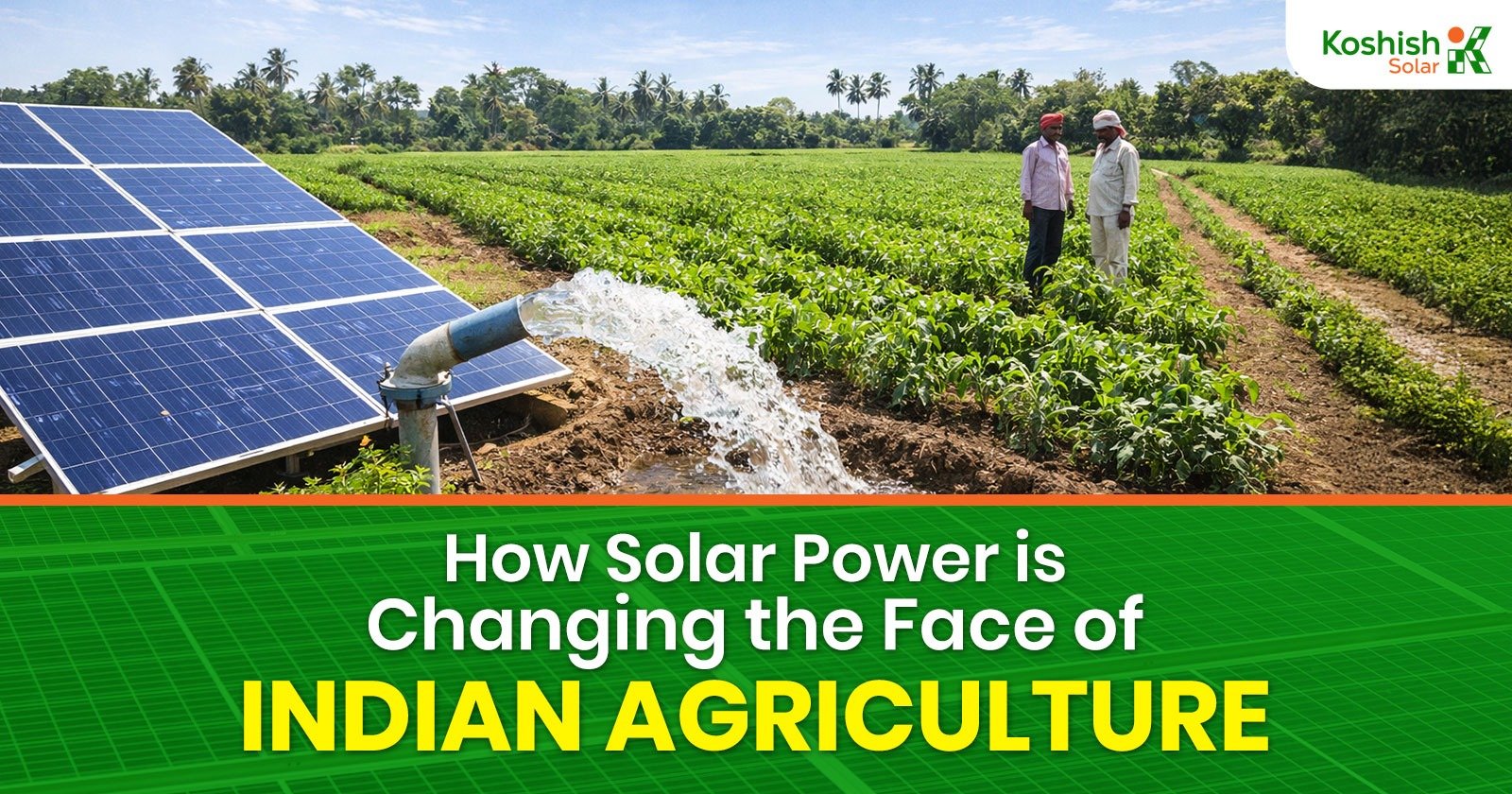
Indian farmers frequently face major problems like high diesel costs, frequent power cut, and rising farming costs. These challenges make agriculture difficult and less profitable. But by adopting Solar power solutions, farmers can overcome these challenges.
With sustainable solar energy, farmers can run irrigation pumps, store crops, and power farm equipment at a lower cost. Solar power provides reliable electricity, reduces fuel costs, and supports eco-friendly farming.
In this blog, we will discuss the benefits of Solar for agriculture, Government support for agri-solar, and more, which will help farmers in agriculture.
How Is Solar Energy Used in Agriculture?
Solar energy plays an important role in agriculture. It helps farmers by providing affordable and reliable power. Nowadays, solar systems are used in many farming activities such as:
Solar Water Pumps
Solar water pumps are the best options for farmers or where there is an unreliable electricity grid. These solar water pumps use solar energy to draw water from wells or canals for irrigation. They help farmers to avoid the power cut problem and save both time and money.
Solar panels generate electricity that runs the pump. If the system produces extra energy, so it can be stored in batteries for later use
The required number of solar panels depends on the pump size, for example. For example, a small ½ HP pump needs only a few panels, while bigger pumps need more panels to work properly.
Solar Irrigation Systems
For converting sunlight into usable electricity, a solar irrigation system uses solar panels that run water pumps. These pumps pull water from wells or rivers to irrigate crops.
It is a clean and affordable option as compared to diesel or grid power. It reduces fuel costs and reliance on electricity. The system uses solar panels, solar water pumps, a controller, and pipes, which make it perfect for farmers.
Crop and Grain Drying
Farmers have always used sunlight to dry crops. Now, solar dryers make this process simple and safer by protecting crops from dust and pests.
Electricity in Remote Areas
Solar power provides electricity to farms in remote areas. It helps run farm tools, lights, and machines without depending on grid power.
Solar Cooling Systems
Solar-powered cooling systems help farmers to store fruits, vegetables, and milk safely. These systems work day and night and reduce crop losses.
Benefits of Solar Power for Agriculture
There are many benefits of solar for agriculture, such as reliable power, clean energy, and better waste management. It helps to reduce costs, supports sustainable farming, and provides reliable energy.
- Cost Savings for Farmers: Solar energy reduces electricity and diesel costs. Farmers can produce their own energy and save money, which can be used for seeds, equipment, or labor.
- Clean and Eco-Friendly Energy: Solar power is clean and renewable. It generates clean energy without emitting carbon emissions and helps farmers to protect the environment.
- Reliable Power Supply: In rural areas, frequent power cuts are common. Solar systems provide continuous power.
- Better Water Management: Solar irrigation systems help farmers to use water efficiently. They provide a regular water supply and reduce dependency on fuel.
- Increased Productivity; Solar power runs irrigation systems, greenhouses, and storage units. This system reduces manual effort and helps farmers to grow more crops efficiently.
Challenges Farmers Face with Solar Power
Solar power for agriculture provides many benefits to farmers, but there are some challenges that they should keep in mind.
- High Initial Cost: Solar panel system installation can be expensive, which may be challenging for small farmers. But due to Government subsidies support and easy financing options, farmers can easily install the system.
- Limited Power at Night: Solar energy is only available during the day. Farms that need power at night can, so they can use batteries to store extra energy for later use.
- Space Requirements; Solar panels need space, which can be challenging for small farms. Solutions like agrivoltaics help farmers to install panels above crops so they can expand plants and generate solar power at the same time.
Why Koshish Solar Is the Best Choice for Solar for Agriculture?
Koshish Solar helps farmers to adopt solar for agriculture and renewable farming solutions that are reliable, affordable, and easy to maintain. Before designing a solar system, we understand the challenges that farmers face, like high electricity costs and frequent power cuts.
During the design of a system, our focus is on agricultural energy savings by reducing reliance on grid electricity and fossil fuels. From solar for farms like water pumps to full irrigation systems, we ensure efficient performance that reduces energy bills and increases farm productivity.
Koshish Solar also helps farmers to claim government subsidies for agricultural solar projects. Our team manages all documentation and processes, which makes solar installation simpler and more affordable.