
,With rising electricity bills every day, solar energy is becoming the best choice in India. However, many people want to know about the cost of solar panel installation in India before making a decision.
The total cost can vary based on system size, type of panels, installation method, and government subsidies. In this blog, we will explain the solar panel installation cost in India and solar ROI India that helps you to choose the right system for your home or business.
What Is the Solar System?
As we know, the government takes some initiatives to promote a sustainable environment. Nowadays, the Solar System plays an important role in supporting a clean and green environment.
Solar systems generate clean energy directly from the sun without emitting carbon emissions. It helps to reduce your electricity bills, supply continuous energy and provide clean energy.
Solar Installation Costs Breakdown
The cost of a solar system depends on factors such as system size, component quality, and whether you choose an on-grid, off-grid, or hybrid system.
A 3kW solar system is ideal for small to medium-sized homes and costs around ₹2,00,000 with Koshish Solar.
We also assist you in claiming government subsidies under the PM Surya Ghar Yojana. For a 3kW system, you may receive up to ₹78,000 from the Central Government and up to ₹60,000 from the State Government.
Our team manages the complete subsidy process, including documentation and net metering approvals, ensuring a smooth and hassle-free experience.
See the table below for solar panel costs, subsidies, and net price after subsidy.
| Solar Project Capacity | Project Cost (Rs) | MNRE Subsidy (Central Govt.) | Subsidy By the State Govt. * | Total Subsidy will be credited (Rs.) | Net Solar System Cost |
| For 3 kWp | ₹2,10,000 | ₹78,000 | ₹30,000 | ₹1,08,000 | ₹1,02,000 |
| For 4 kWp | ₹2,70,000 | ₹78,000 | ₹30,000 | ₹1,08,000 | ₹1,62,000 |
| For 5 kWp-1Ph | ₹3,05,000 | ₹78,000 | ₹30,000 | ₹1,08,000 | ₹1,97,000 |
| For 5 kWp-3Ph | ₹3,37,000 | ₹78,000 | ₹30,000 | ₹1,08,000 | ₹2,29,000 |
| For 6 kWp | ₹3,70,000 | ₹78,000 | ₹30,000 | ₹1,08,000 | ₹2,62,000 |
| For 8 kWp | ₹4,70,000 | ₹78,000 | ₹30,000 | ₹1,08,000 | ₹3,62,000 |
| For 10 kWp | ₹5,65,000 | ₹78,000 | ₹30,000 | ₹1,08,000 | ₹4,57,000 |
Note:
- These are approximate installation costs; prices may vary based on your energy needs, location, and site conditions.
- *State government subsidy varies by location and can be up to ₹60,000.
Factors Affecting Cost
There are several factors affecting solar cost determine the final project value. Understanding these helps you plan a truly affordable solar installation.
System Size: Larger systems reduce per-kW costs. A 10 kW plant has lower per-unit solar system pricing than a 1 kW system.
Panel Technology: Monocrystalline panels increase upfront solar panel installation cost in India, but improve long-term solar investment returns.
On-Grid vs Off-Grid:
- On-grid: Lower cost, faster solar ROI India
- Off-grid: Higher cost due to batteries
- Hybrid: Balanced but expensive
This is one of the biggest factors affecting solar cost.
Roof Type & Structure: Metal roofs cost less than RCC roofs. Height, tilt, and shading also impact solar system pricing.
Location & State Policies: State subsidies and net-metering rules directly influence solar panel installation cost in India.
Quality of Components: Cheaper components may reduce upfront cost but negatively impact solar investment returns.
ROI and Payback Period
The biggest advantage of solar is its strong financial performance. Solar ROI India is among the best globally due to high sunlight availability.

Typical Solar ROI in India
- Residential: 18–25% annually
- Commercial/Industrial: 25–35% annually
Most systems recover their solar panel installation cost in India within 4–6 years, while the system life exceeds 25 years.
Payback Example (5 kW Residential System)
- Installation cost: ₹3 lakh
- Annual savings: ₹65,000 – ₹75,000
- Payback period: ~4.5 years
- Lifetime solar investment returns: ₹18–22 lakh
This makes solar one of the safest long-term investments, outperforming fixed deposits and many market instruments.
How to Save on Installation
Achieving affordable solar installation does not mean compromising quality. Here’s how you can reduce costs smartly:
Use Government Subsidies: Residential consumers can reduce solar panel installation cost in India by 20–40% using MNRE subsidies.
Right-Size Your System: Avoid oversizing. Correct capacity improves solar ROI India and optimises solar system pricing.
Choose On-Grid Systems: On-grid systems offer the best solar investment returns with lower upfront cost.
Compare Multiple Quotes: This helps identify overpriced components and manage factors affecting solar cost.
Work with Experienced Installers: Professional installers reduce maintenance issues and protect long-term solar investment returns.
Why Solar Is a Smart Financial Decision
Despite the upfront solar panel installation cost in India, solar offers predictable savings, inflation protection, and energy independence. With falling solar system pricing and rising power tariffs, the gap between cost and benefit keeps widening in favour of solar.
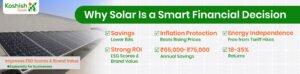
For businesses, solar also improves ESG scores and brand value while delivering strong solar ROI India.
Wrapping Up
The solar panel installation cost in India is no longer a barrier, it’s an opportunity. With transparent solar system pricing, understanding the factors affecting solar cost, and a clear view of solar ROI India, solar becomes a reliable wealth-generating asset.
By choosing the right system design, using subsidies, and focusing on long-term solar investment returns, you can achieve truly affordable solar installation that pays for itself and keeps generating savings for decades.